PINNED
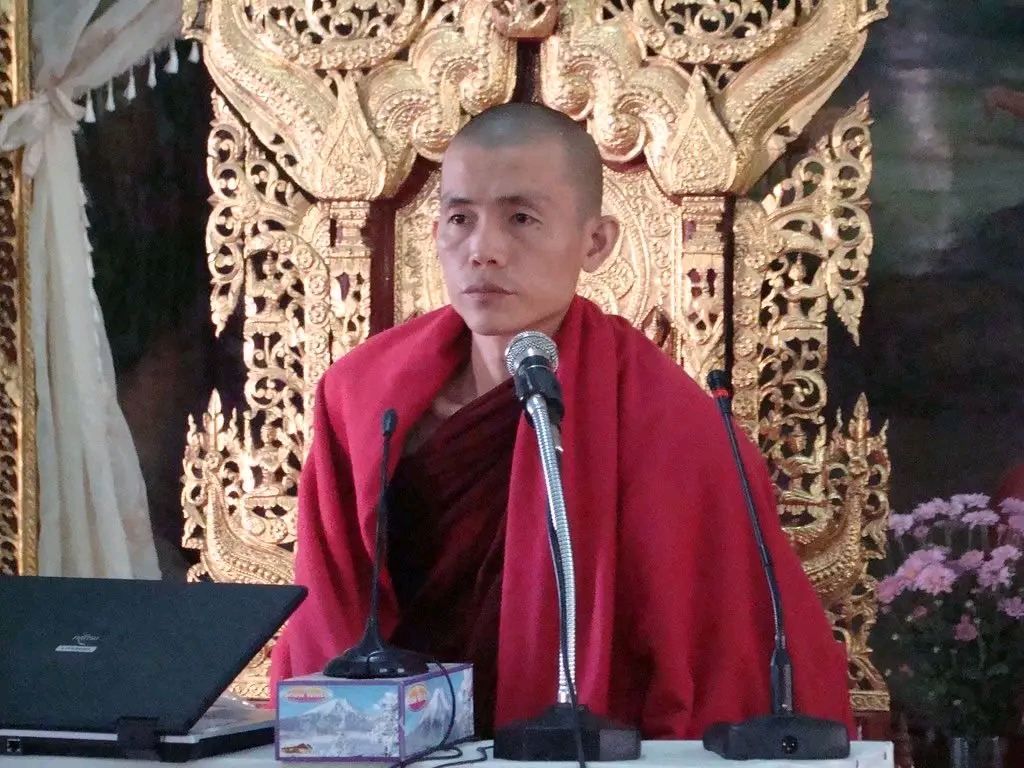
Sayadaw Ashin Ottamathara and the world of Thabarwa
Bhadda’s account of a teacher, a community and a practical way of practising through service.
Read the story →FRIENDS / SAYALAY BHADDA NYANI
A South African Buddhist nun in the Burmese Theravāda tradition.
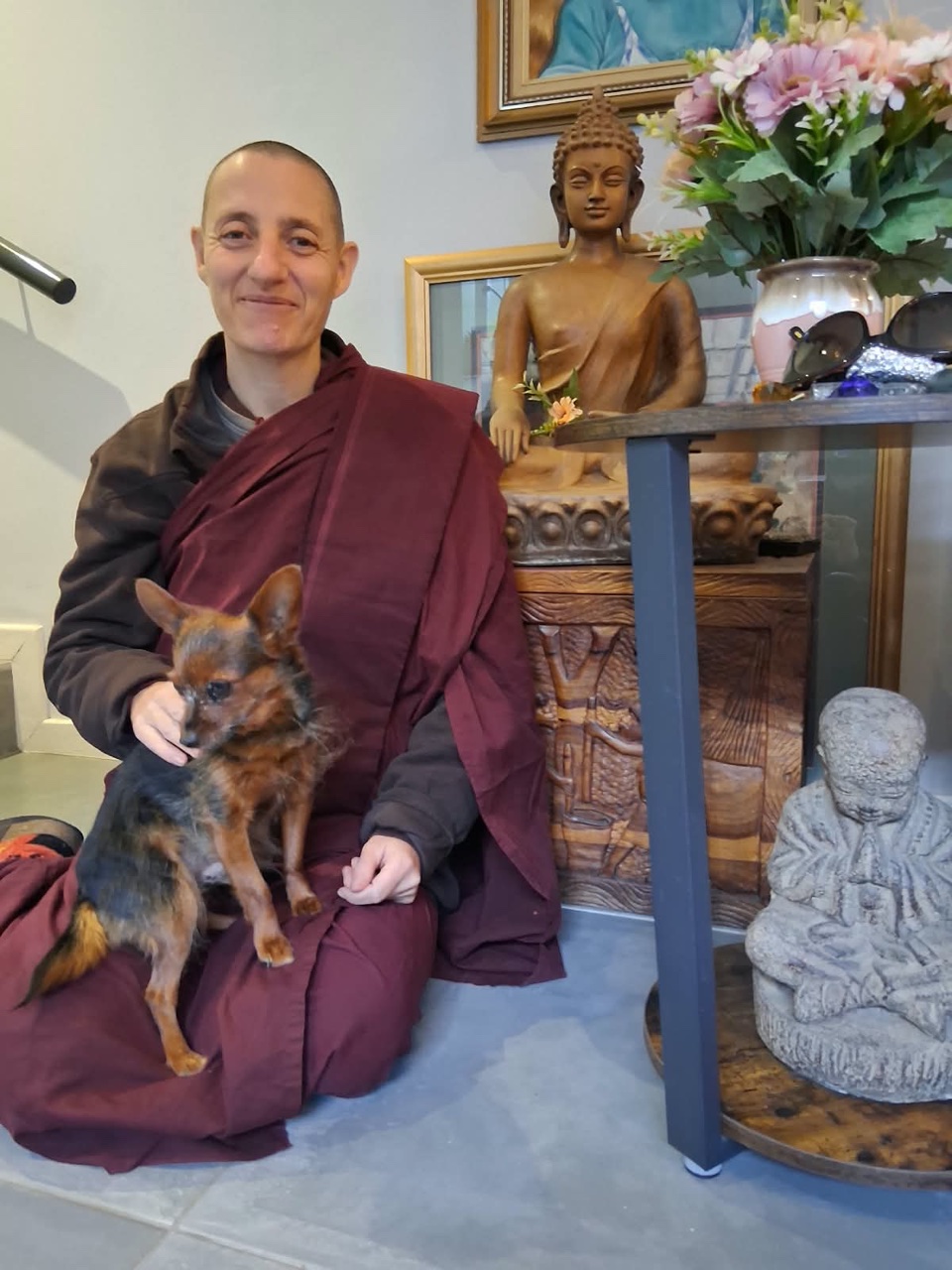
Sayalay Bhadda Nyani ordained under Sayadaw Ashin Ottamathara, founder of Thabarwa Nature Centers worldwide. After four years living in Thabarwa centres and travelling with Sayadaw, she is developing a vision to begin a Thabarwa centre in South Africa.
ABOUT
Sayalay Bhadda Nyani ordained under Sayadaw Ashin Ottamathara, who is the founder of Thabarwa Nature Centers worldwide.
Before ordaining, she was involved in permaculture, sustainability and community living. Trying to do good in the world, but after seeing many communities fail and seeing her own limitations, she was drawn to this particular community called Thabarwa: a place where all are welcome, where monastics and lay people live together.
In Bhadda’s account, Thabarwa is a place of refuge for anyone regardless of age, race, social and financial condition, health condition, physical and mental state. It provides basic necessities of life and medical care for free so that people can fully concentrate on the pursuit and realization of Dhamma.
She wanted to learn for herself how this community worked, how it survived and was not complete chaos. She spent four years living in various Thabarwa centers around the world and travelling with Sayadaw to learn directly and experience it for herself.
She experienced the challenges and difficulties in such communities, but also the transformational effect of living with all kinds of people while practising mindfulness and detachment. She learned that the key to success was very simple, based on the profound teachings of the Buddha and Sayadaw: the application in real-life situations of right understanding of cause and effect, or kammic law.
Putting it into practice takes time, patience and daring. But if one dares, one can establish oneself firmly on the path to freedom from all suffering. Sayadaw teaches in a very practical way, using his centers as his greatest teaching.
Based on these understandings, and inspired by the unlimited service of her teacher Sayadaw Ashin Ottamathara and his ability to help so many people in need while continuing to open new centers, Sayalay Bhadda Nyani has the vision to start a Thabarwa center in South Africa. By using the law of cause and effect, without attachment to self, and doing good deeds together, she says great strides have already been made in this direction.
FROM BHADDA
PINNED
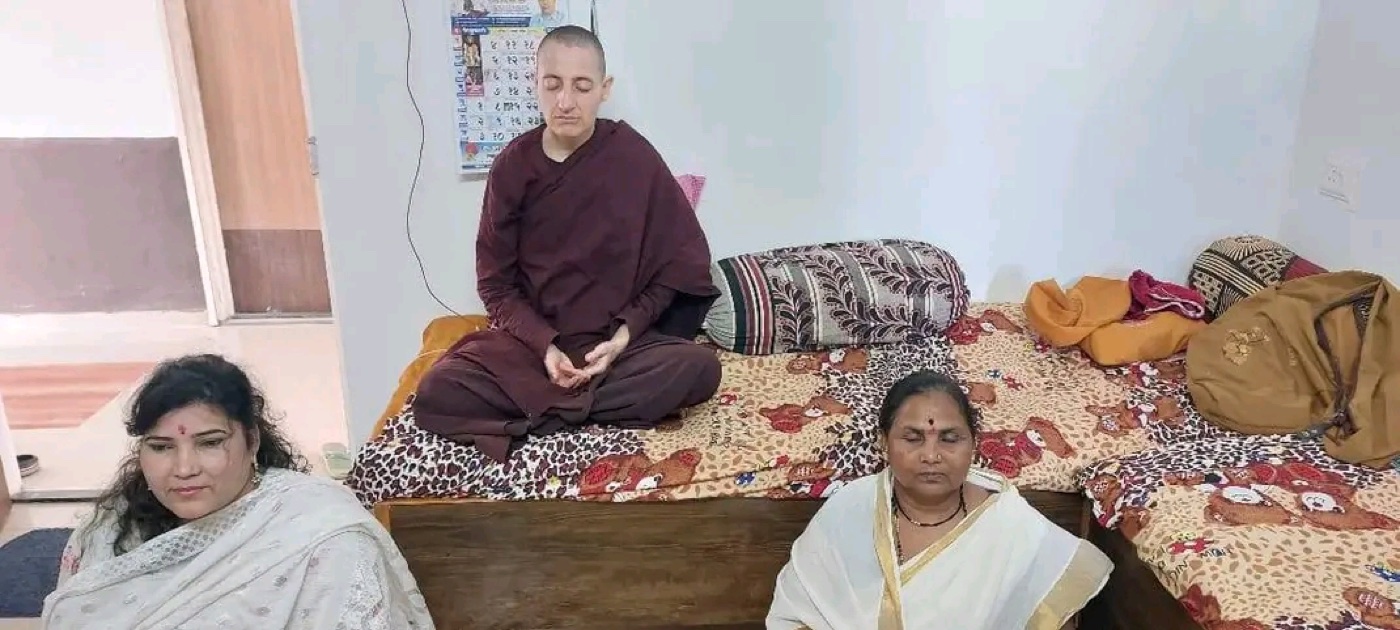
Bhadda’s account of a teacher, a community and a practical way of practising through service.
Read the story →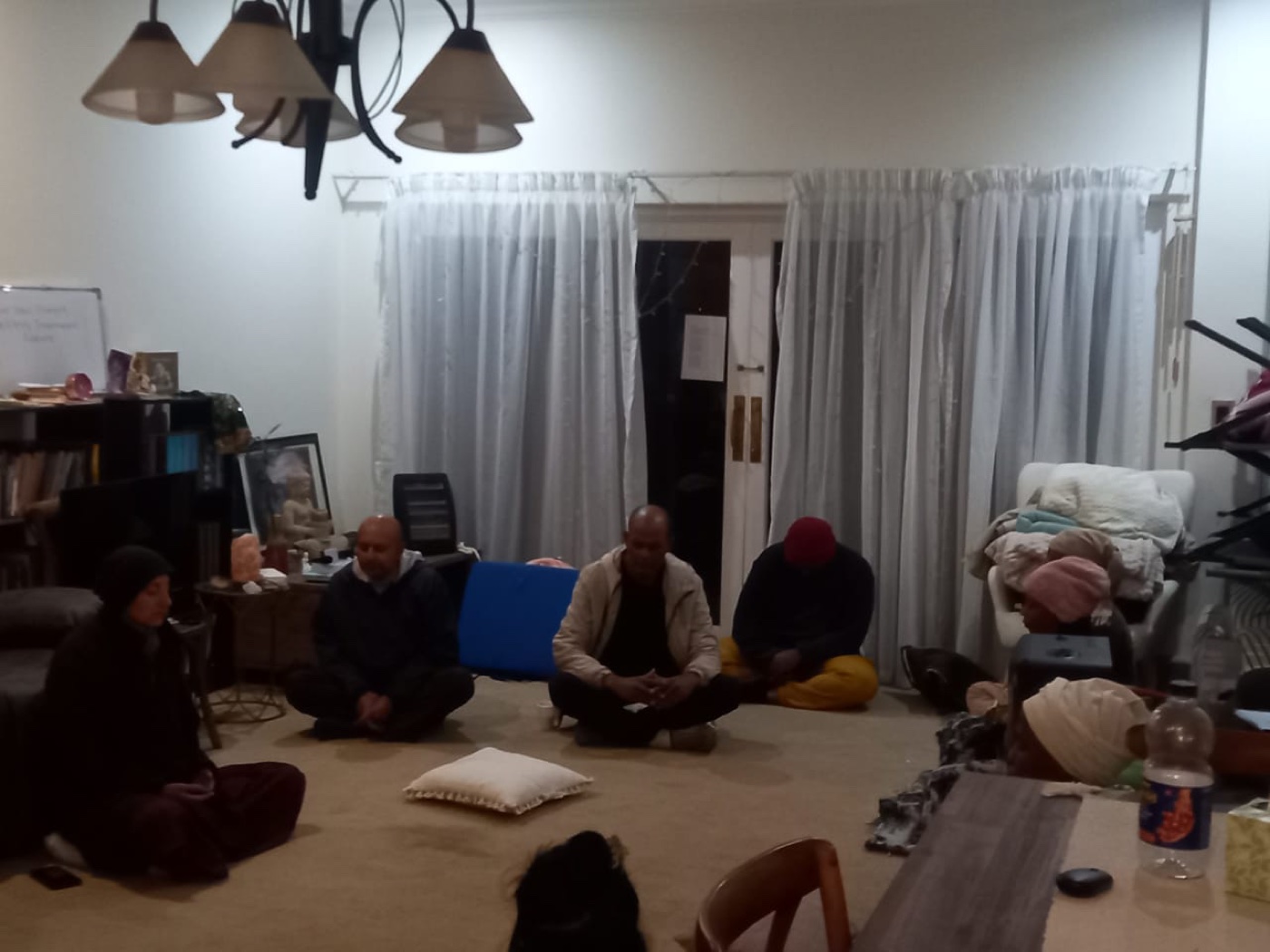
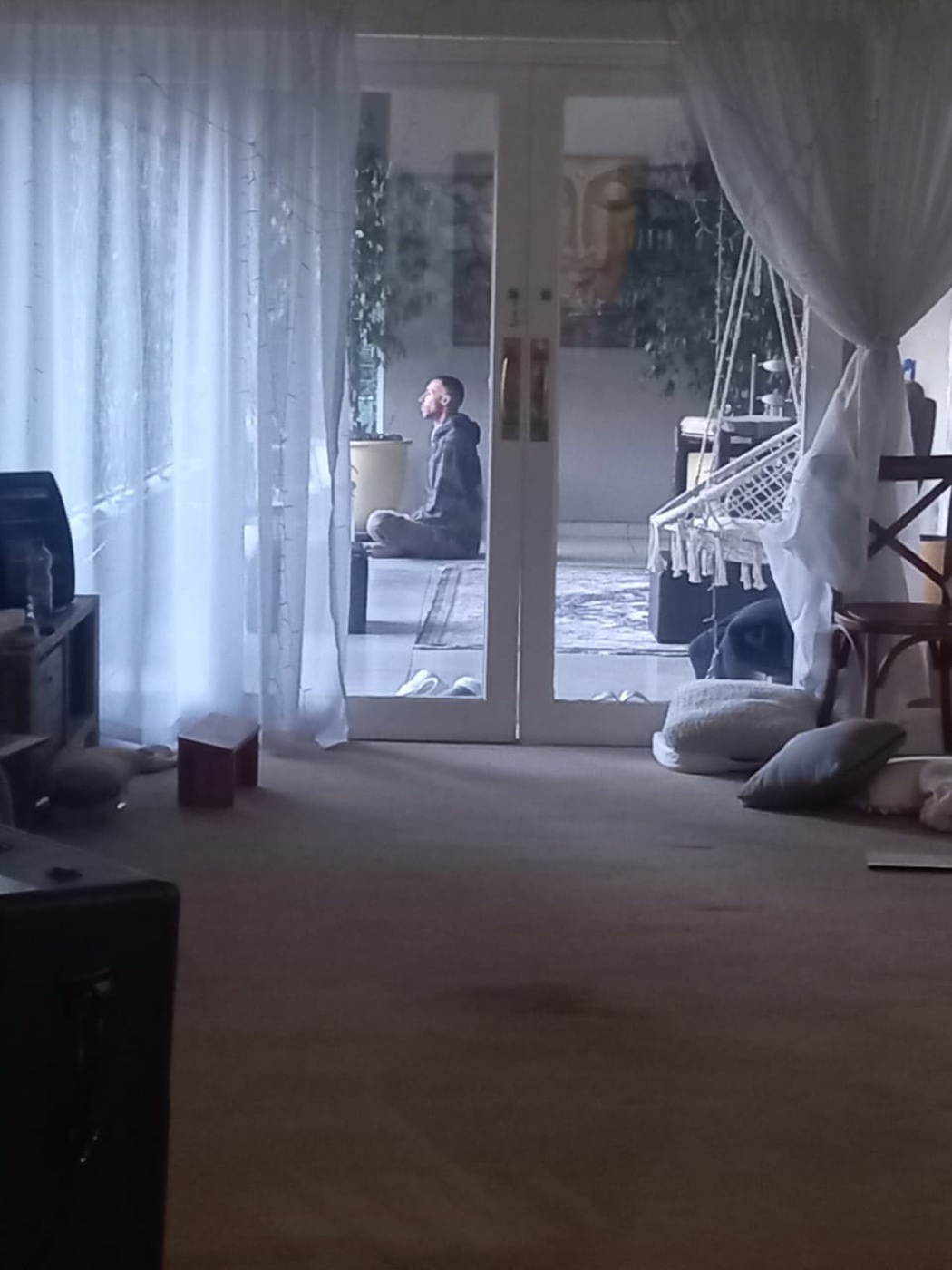
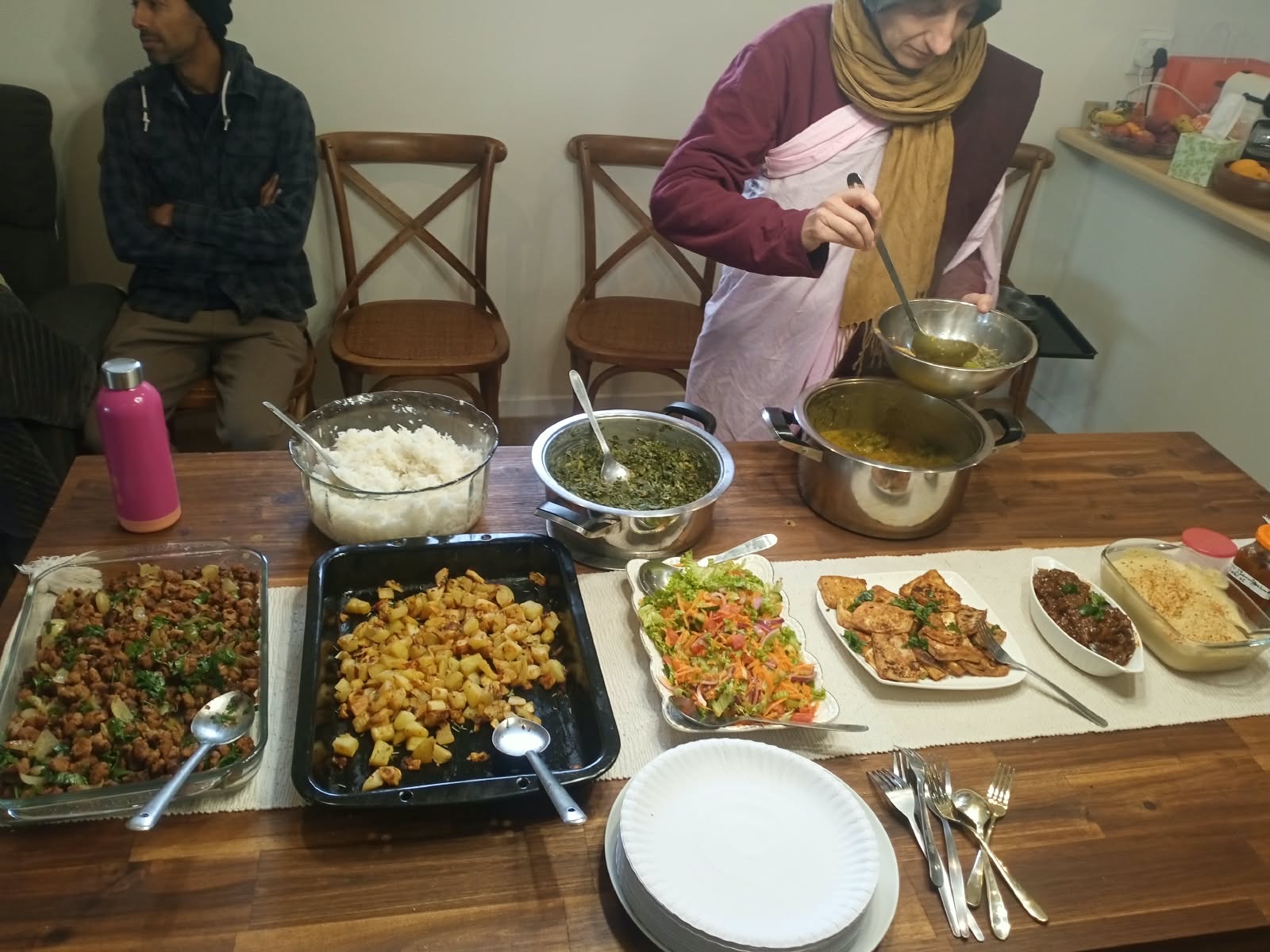
REFLECTION
A reflection on harmony, causes and conditions, and the hope that a first gathering may become a beginning.
Read the story →FROM THE PĀLI CANON
When a reading appears here, its text, named translation and direct source will be shown together.
BUDDHIST OBSERVANCE CALENDAR
Africa/Johannesburg
Dates are not displayed without a named calendar source. Observance calendars vary across traditions and communities.
 Watch A Q&A with Sayadaw on YouTube
BHADDA SHARES · WATCH
A really interesting Q&A with Sayadaw about his method of teaching mindfulness and detachment, free from attachment to one tradition, one teacher or one method.
Later he also talks about building Dhamma halls in a more natural way, rather than in traditional ways. He often emphasises that we should not destroy nature, because then nature will destroy us. This is also cause and effect.
He talks about being guided by the natural law of cause and effect, or kammic law, and how this has guided him in his teaching. Towards the end, he guides us to understand how attachment creates our reality: everything we attach to is what we become.
Watch on YouTube ↗BHADDA SHARES · READ
External Facebook text · authorship not confirmed
It is not easy to find oneself at a stage of practice where the path is still quite beginning, yet an understanding of Dhamma concepts is already arising. We learn about mindfulness, detachment, non-self, and ignorance. We begin to see the advantages and disadvantages of various states of mind and actions. We discover how inevitable our mistaken actions are, as they arise from habit, defilements, and not knowing.
And it seems that we have already touched the right understanding. But unfortunately, this often happens with attachment. Because of that, even correct concepts begin to be used wrongly, and what could have become wisdom turns into yet another form of clinging. Then the result of our actions is not less suffering, but the creation of more suffering.
Attaching to Dhamma concepts and to their importance, we begin to deny living experience when we insist too rigidly on the idea of non-self. We accuse others of ignorance, as if it were not a conditioned process but someone’s essence. We point to other people’s lack of mindfulness without noticing our own loss in theories, formulations, and correct words.
We resort to quoting Dhamma teachings without sufficient understanding and without truly applying their essence. In itself, the idea is good: to speak about Dhamma, to share Dhamma, to dedicate time in one’s life to Dhamma. But attachment to what is right, clinging to correct words, and excessive emphasis on the theoretical side are not wholesome. Where there is grasping, a subtle form of “I” has already appeared—an “I” that wants to know, explain, correct, and assert.
That is why my teacher, Sayadaw Ottamasara, teaches us always to be mindful with detachment. He explains the Middle Way as the ability simply to do and simply to use—without denial and without attachment. Then our actions do not become awkward, and knowledge does not become heavy or oppressive. Knowledge is simply available, and actions are simply beneficial.
The stage of special enthusiasm for Dhamma, when we want to share the newly discovered benefits with others as quickly as possible, is in some sense natural and almost inevitable for a practitioner. But that is precisely why it is important to recognize it in time and not miss the chance to adjust our attitude. Otherwise, even inspiration from Dhamma can quietly turn into self-assertion through Dhamma.
We should learn the Middle Way as early as possible: to remove our “self” from knowledge, from the desire to speak, from the urge to teach, correct, and assert. We need to learn to do-only and to use-only. This means not grasping, not seizing actions as our own, not building identity out of them, but merely remaining present in the process with mindfulness. Such application of Dhamma—without attachment and without rejection—brings the right results. It gradually leads to liberation from the defilements of the mind, when Dhamma itself begins to guide the process of awakening naturally, and practice becomes less and less based on ego effort and more and more grounded in wise seeing of things as they are.
Therefore, it is important not only to know Dhamma, but also to notice with what state of mind we approach it. The same correct word can either help liberation or become a new support for clinging. If mindfulness is joined with detachment, then Dhamma ceases to be something possessed and becomes a path to freedom.
View the original Facebook post ↗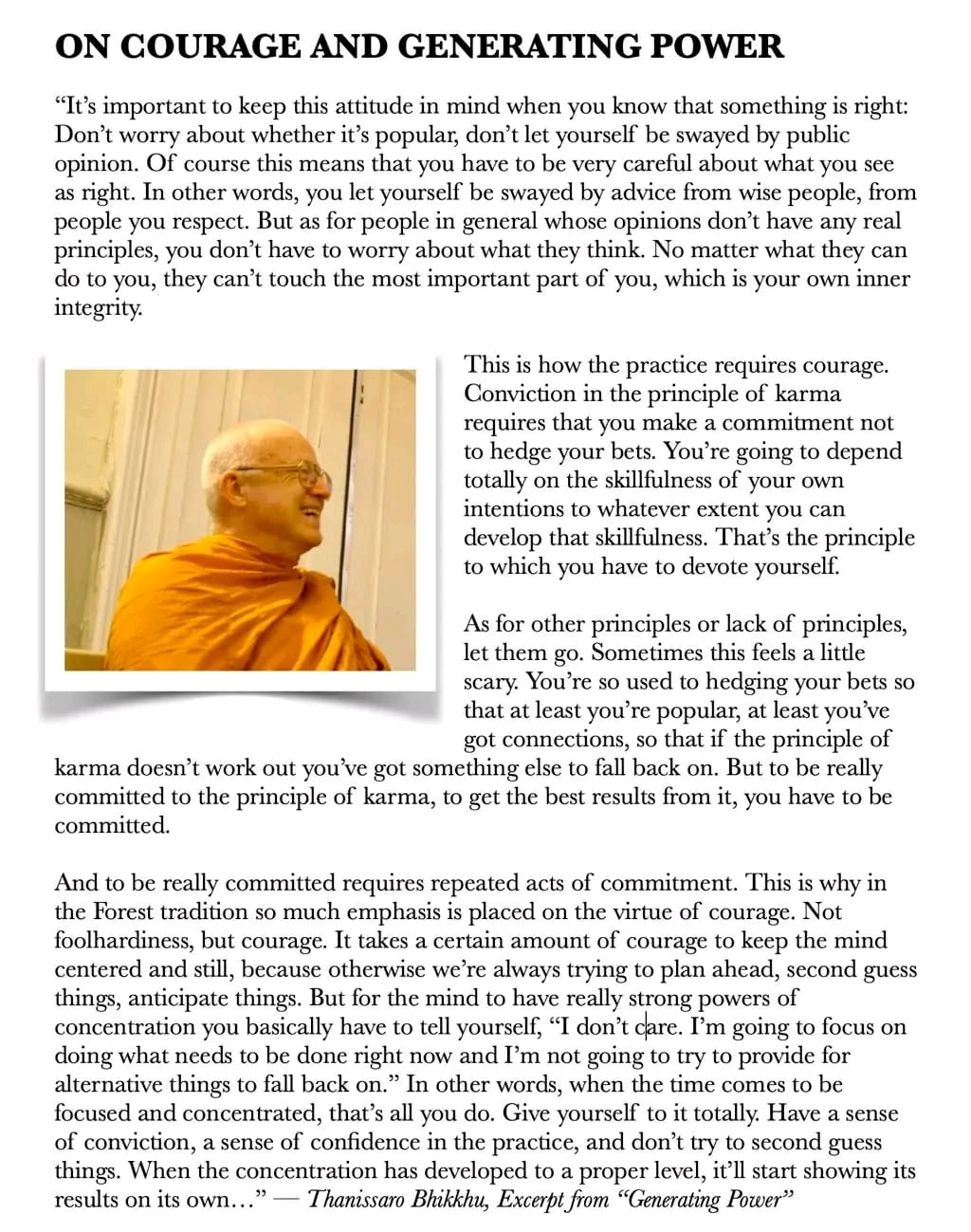
BHADDA SHARES · TEACHING
Thanissaro Bhikkhu
Excerpt from “Generating Power”.